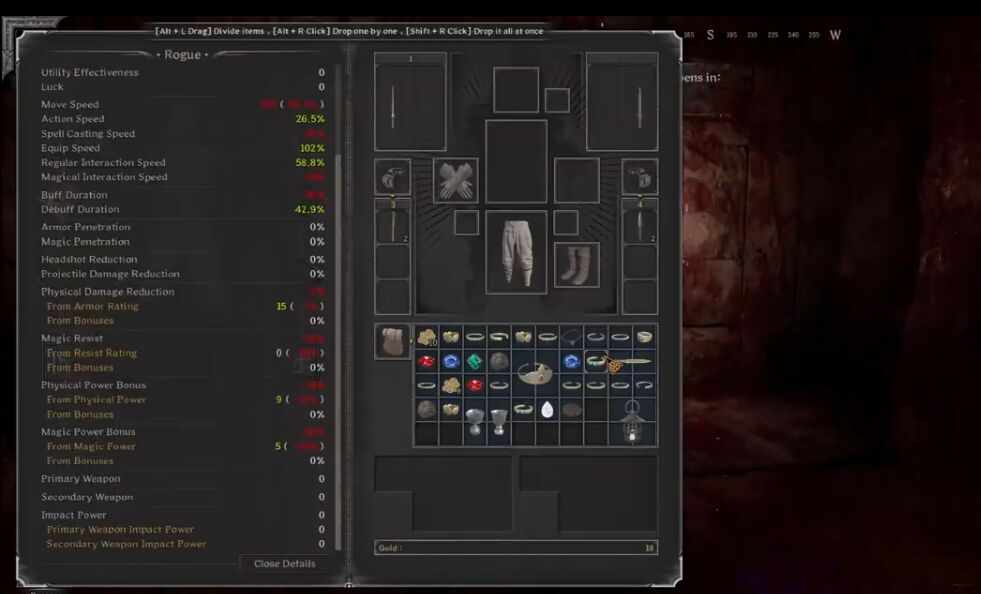


New World – Void Darkplate: Bug, Tooltip Error, or Misunderstanding

Update:

Following a discussion with xenarthran_salesman on the New World Discord, the situation surrounding Void Darkplate seems to have become clearer:

If you begin by wearing all your armor, including another heavy chest piece with similar armor values, and then put on Void Darkplate, you’ll notice a 20% increase in your total armor value. When you switch back to the original heavy chest piece, your armor drops, but it only decreases by approximately 20% of Void Darkplate’s armor value, which appears higher than initially.

In essence, it appears as though Void Darkplate applies a kind of “buff” to each of your other armor pieces, increasing their armor by 20%. When you swap Void Darkplate with a similar heavy chest piece, it doesn’t remove this “buff” from the other armor pieces. As a result, when you switch back to Void Darkplate, it seems like the calculations are incorrect because you’re starting from a higher armor value due to that “buff.” If you remove and re-equip each armor piece, your total armor value returns to its original state.

According to xenarthran_salesman, the issue of armor remaining higher after removing Darkplate is merely a user interface (UI) bug, and it doesn’t actually provide any additional damage mitigation beyond what the correct values would show.

There have been conflicting reports about whether it’s just a UI problem or if it actually provides old fortification, absorption, or damage reduction. I can’t personally address the UI issue and have doubts about it offering damage absorption based on my limited knowledge of the game files.

DukeSloth’s video response has been mentioned, but the statement “the armor multiplier is just additive with other multipliers” seems unclear. I couldn’t find any additional details in the perk description in the game files.

In the game files for Void Darkplate, it’s listed as:

PhysicalArmor: 0.2
ElementalArmor: 0.2

For comparison, SnS’s Sturdy Shield provides 15% physical armor and is listed as:

PhysicalArmor: 0.15
ElementalArmor: 0.0

It appears that Void Darkplate offers a straightforward armor increase, which doesn’t seem to be a subject of debate. However, this is something that can be confirmed in the game at a later time.

Regarding the status effect/fortify from Fortifying Shield Rush, we have:

PhysicalArmor: 0.05
ElementalArmor: 0.05

These values would scale based on your Gear Score (GS), and fortify was updated to no longer function as a flat absorb or damage reduction but as an increase in armor.

In contrast, the status effect from Defensive Formation lists various absorb modifiers:

ABSStandard: 0.3
ABSSiege: 0.3
ABSStrike: 0.3
ABSSlash: 0.3
...and so on

There is no mention of armor. It would be reasonable to expect that Void Darkplate would list absorb values rather than Physical/Elemental Armor values if it indeed provided 20% old fortification.

The observable result is an approximate 20% increase in the chest armor value displayed in the UI, leading to speculation about whether Void Darkplate is malfunctioning, if there is a tooltip error, or if there’s a perplexing perk description.

So, what’s the story with Void Darkplate? Is it genuinely broken, is there an issue with the tooltip, or is there something about it that we haven’t fully understood yet?

More New world guides, news and New World gold for sale on MMOexp.com, welcome and great service here.
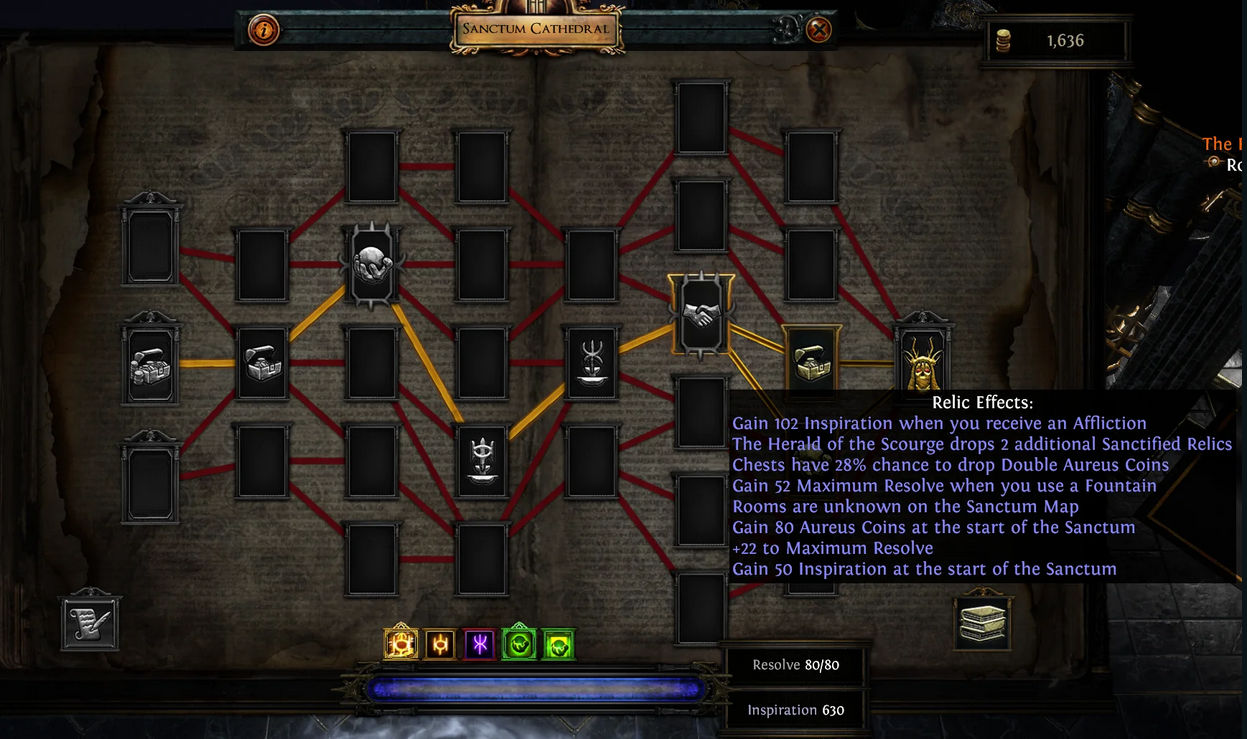

Path of Exile: The Ultimate Guide to Relic Runs

Path of Exile: The Ultimate Guide to Relic Runs

Relic runs in Path of Exile are a type of endgame content that can be very challenging and rewarding. They are a great way to test your build and your skills, and they can also be a great way to earn valuable rewards.

In this guide, we will discuss everything you need to know about relic runs, including how to prepare for them, how to run them, and what to expect.

What is a Relic Run?

A relic run is a type of endgame activity in Path of Exile that takes place in the Forbidden Sanctum. In a relic run, you will progress through a series of rooms, each of which contains a different challenge. The challenges can be anything from fighting monsters to solving puzzles.

As you progress through the relic run, you will earn relics. Relics are powerful poe items that can give your character a variety of benefits. Some relics can increase your damage, while others can increase your defense or give you new abilities.

The goal of a relic run is to reach the end and defeat the boss. If you are successful, you will be rewarded with a large amount of Path Of Exile Currency, experience, loot, and relics.

How to Prepare for a Relic Run

Before you attempt a relic run, it is important to make sure that you are well-prepared. Here are a few things you should do:

• Make sure your build is strong enough. Relic runs can be very challenging, so it is important to make sure that your build is strong enough to handle the content. You should have a good amount of damage and defense, and you should also be able to survive burst damage.
• Bring the right items. There are a few items that can be very helpful in relic runs. These include:
o Flask of Warding: This flask can help you to survive burst damage.
o Flask of Heat: This flask can help you to deal with chilled and frozen enemies.
o Flask of Staunching: This flask can help you to deal with bleeding and poison enemies.
o Quicksilver Flask: This flask can help you move around the map quickly.
o Utility flask of your choice: This could be a flask that gives you increased damage, increased defense, or any other effect that you find helpful.
• Practice: The best way to prepare for a relic run is to practice. You can do this by running the Forbidden Sanctum on lower levels. This will help you to learn the different challenges that you will face and how to deal with them.

How to Run a Relic Run

Once you are prepared, you can start your relic run. To do this, simply head to the Forbidden Sanctum and enter the portal.

When you enter the Forbidden Sanctum, you will be placed in a room with a challenge. The challenge could be anything from fighting monsters to solving a puzzle.

To complete the challenge, you will need to use your skills and items to defeat the enemies or solve the puzzle. Once you have completed the challenge, you will be rewarded with a relic and you will be able to progress to the next room.

As you progress through the relic run, the challenges will become more difficult. You will also need to be careful about the relics that you choose. Some relics can give you powerful benefits, but others can also have negative side effects.

The goal of the relic run is to reach the end and defeat the boss. If you are successful, you will be rewarded with a large amount of experience, loot, and relics.

Tips for Relic Runs

Here are a few tips for relic runs:

• Be careful about the relics that you choose. Some relics can give you powerful benefits, but others can also have negative side effects.
• Use your environment to your advantage. Many of the rooms in the Forbidden Sanctum have traps and obstacles that you can use to your advantage.
• Don’t be afraid to use your flasks. Flasks can be very helpful in relic runs, so don’t be afraid to use them often.
• If you are struggling, don’t be afraid to leave the relic run. You can always come back later when you are better prepared.

Conclusion

Relic runs are a great way to challenge yourself and earn valuable rewards. If you are looking for a new challenge, I encourage you to try a relic run.

Path of Exile: Currency Making Guide

Path of Exile (PoE) is a complex and ever-changing action RPG, with a vast economy that can be daunting for new players. However, with a little knowledge and effort, it is possible to generate a significant amount of currency in PoE, even in the Hardcore trade league.

This guide will explore a variety of currency making strategies, from beginner-friendly to advanced. Whether you are looking to earn your first few Chaos Orbs or become a self-made millionaire, this guide has something to offer.

Beginner Strategies

If you are new to PoE, the best way to start making currency is to focus on the basics. This includes:

• Completing the campaign: The campaign rewards players with a variety of valuable items, including currency, gear, and skill gems.
• Running maps: Maps are the primary source of endgame content in PoE, and they offer a wide range of rewards, including currency, gear, and map fragments.
• Selling unwanted items: As you play, you will accumulate a large inventory of unwanted items. These items can be sold to other players for currency.

Intermediate Strategies

Once you have a basic understanding of the game, you can start to explore more advanced currency making strategies. These strategies include:

• Focusing on specific content: PoE offers a variety of in-game mechanics, such as Delve, Incursion, and Breach. By specializing in a specific mechanic, you can become more efficient at farming valuable rewards.
• Flipping items: Flipping involves buying items at a lower price and selling them for a higher price. This can be a profitable strategy if you have the knowledge to identify undervalued items.
• Investing in items: Investing in items involves buying items that you believe will increase in value over time. This can be a risky strategy, but it can also be very profitable if you make the right investments.

Advanced Strategies

If you are looking to make the most currency possible, you can explore more advanced strategies, such as:

• Crafting services: Crafting services involve using your knowledge and resources to craft valuable items for other players. This can be a very profitable strategy, but it requires a significant investment of time and currency.
• Boss farming: Boss farming involves killing endgame bosses, such as Uber Elder and the Maven. These bosses drop valuable items that can be sold for a lot of currency. However, boss farming can be very challenging and requires a well-built character.
• Running specialized services: Running specialized services, such as lab running or chaos recipe services, can be a profitable way to earn currency. However, these services can be competitive, and you may need to build a reputation to attract customers.

Tips for Success

Regardless of the strategy you choose, there are a few general tips that can help you succeed in making currency in PoE:

• Stay informed: The PoE economy is constantly changing, so it is important to stay informed of the latest trends and developments. This can be done by reading the official PoE forums, watching popular streamers, or joining a community discord.
• Be patient: Making currency in PoE takes time and effort. Don’t expect to get rich quickly. Instead, focus on building your knowledge and resources slowly and steadily.
• Be flexible: Don’t be afraid to adapt your strategy as needed. The PoE economy is constantly changing, and what works today may not work tomorrow. Be willing to try new things and experiment until you find a strategy that works for you.

Conclusion

Making POE currency can be challenging, but it is also very rewarding. By following the tips in this guide, you can start to generate a significant amount of currency, even in the Hardcore trade league. Remember to be patient, flexible, and informed, and you will be well on your way to becoming a wealthy Path of Exile player.

WoW WOTLK Classic: A Paladin’s Guide to Solo Farming the Bad Hill

Everybody loves a good gold maker, and the Bad Hill is a new item in Wrath of the Lich King Classic that has the potential to be a very profitable farm. However, it can also be quite challenging, especially for solo players. This guide will show you how to solo farm the Bad Hill as a Paladin.

What is the Bad Hill?

The Bad Hill is a new item that can be dropped by any mob in the new ICC five-man heroics. It is used to purchase a 251 item level weapon and achievement.

Why is the Bad Hill worth farming?

The Bad Hill is worth farming because it can be sold for a lot of wotlk gold at the auction house. The price will vary depending on your server, but it is expected to be worth a significant amount of gold.

How to solo farm the Bad Hill as a Paladin

To solo farm the Bad Hill as a Paladin, you will need to be able to clear the new ICC five-man heroics. This can be challenging, but it is possible with good gear and skill.

The best place to farm the Bad Hill is in the Pit of Saron heroic. There are a number of mobs in this dungeon that have a chance to drop the Bad Hill, and they are all relatively easy to kill for a Paladin.

To start your farm, simply enter the Pit of Saron heroic and clear your way to the first boss. Once you have killed the first boss, you can then start farming the mobs in the dungeon.

Be sure to focus on the mobs that have a chance to drop the Bad Hill. These mobs are:

Rathbone Laborers
Deathwhisper Necrolites
Deathwhisper Torturers
Deathwhisper Shadow Casters
Plagueborn Horrors

You can also kill the Gargoyles in the dungeon, but they are not as efficient to farm as the other mobs.

Once you have killed a mob, be sure to loot it immediately. The Bad Hill has a very low drop rate, so you don’t want to miss out on any chances.

If you don’t get a Bad Hill after clearing the dungeon, simply reset the instance and try again.

Tips for solo farming the Bad Hill as a Paladin

Here are a few tips for solo farming the Bad Hill as a Paladin:

Use your stuns and interrupts liberally. This will help you to control the mobs and prevent them from killing you.
Focus on the mobs that have a chance to drop the Bad Hill. Don't waste your time on mobs that don't have a chance to drop it.
Be patient. The Bad Hill has a very low drop rate, so it may take you some time to get one.

Conclusion

Solo farming the Bad Hill as a Paladin can be a very profitable way to make gold. However, it is important to be patient and to focus on the mobs that have a chance to drop it. With good gear and skill, you should be able to clear the new ICC five-man heroics and farm the Bad Hill efficiently.

We hope your Paladin’s Guide to Solo Farming the Bad Hill is helpful. If you want to learn more about WoW WOTLK Classic or are interested in buying WoW WoTLK Gold, feel free to visit MMOexp.

The riposte should indeed be a calculated risk

The recent change to minimize the damage gap between weapon rarities is undeniably the most fantastic update they’ve introduced yet! Huge thanks to IronMace for implementing this change. I’ve been advocating for such a shift for quite some time, and I believe this adjustment should receive much more attention. It feels like this change may have gone somewhat unnoticed, possibly due to the focus on duo queue, but it’s a game-changer, particularly because we all recognized how lackluster starter weapons were when compared to greens and blues!

However, it appears that the longsword may have drawn the short end of the stick in this patch. It seems that vendor-grade longswords still boast similar damage values as before, hovering around 34. I can’t confirm whether epics or legendaries have been adjusted downward, as I haven’t come across any of those variants yet.

Conversely, other significant two-handed weapons have received damage buffs in this update, but the longsword, which already barely outperformed some one-handed weapons in terms of damage, appears to have been left out. While it’s true that the riposte is a potent ability, it carries a certain risk factor, as missing leaves you exposed to free damage, and ripostes aren’t guaranteed to land either. With the base damage of the longsword being significantly lower than that of other two-handed weapons, it necessitates hitting the parry/riposte just to match the damage output of a standard halberd strike. In my opinion, it could benefit from a modest 5-10% increase in damage, maybe you can improve damage through a lot of Dark and Darker Gold.

It’s worth noting that it was at 33 damage before the patch, so it did receive a slight bump with a +1 increase. However, considering its relatively sluggish handling, I had hoped for a bit more improvement.

The riposte should indeed be a calculated risk you take to amplify your damage output, but currently, it feels like it’s the only viable strategy for the longsword. Essentially, if your opponents aren’t easily parry-able, you find yourself dealing less damage than you could with other weapons. Being ignored by enemies during a skirmish becomes a drawback, and attempting to parry carries substantial risk even when facing opponents.

Additionally, it’s worth mentioning that riposte damage remains unaltered from the previous playtest, so when it eventually receives tuning adjustments, the longsword may struggle to compete. The longsword’s damage lags behind other weapons, its range is lackluster, its swing speed and subsequent slowdowns are detrimental, and there are few perks specifically tailored for it, apart from defensive options that could be just as effective with a falchion and heater shield.

To address these concerns and bring the longsword more in line with the halberd, falchion, and spear, I propose increasing the primary combo damage of the longsword (or its base weapon damage). Simultaneously, adjust the riposte to be a calculated risk that can pay off through skill expression, rather than the only viable approach. Additionally, consider reducing the mobility constraints imposed by the longsword’s swings; perhaps introducing a mobility perk specific to longswords or swords in general to enhance build diversity. Addressing these issues would make the longsword a more competitive choice alongside other weapons.

It’s disheartening to witness the other weapons receive enhancements while the longsword remains neglected once again.

More read in my blog: https://heartsandcoins.org/